
The Morocco travel tips in short. Each answer is developed further down the page.
| Question | The short answer |
|---|---|
| How many days do I need? | Three days buys one desert trip. Seven lets you add the Atlas and the coast without rushing |
| Private or shared? | Shared saves money and fixes your schedule. Private buys time on the ground and a departure hour you choose |
| What is included? | Transport and driver always. Lunch and entrance fees usually not, which is what makes two prices comparable |
| Do I need a guide? | In a medina and on the trails, yes. For a day trip by road, the driver is usually enough |
| How much should I tip? | It is expected but never fixed. A rough scale is in the section below |
| How do I pay? | A deposit secures the date, the balance is paid on the day. Carry cash outside the cities |
| Is it safe? | Yes, with the ordinary caution of any busy destination. The real risks are not the ones people expect |
| What should I pack? | Layers. A desert night and a Marrakech afternoon are twenty degrees apart |
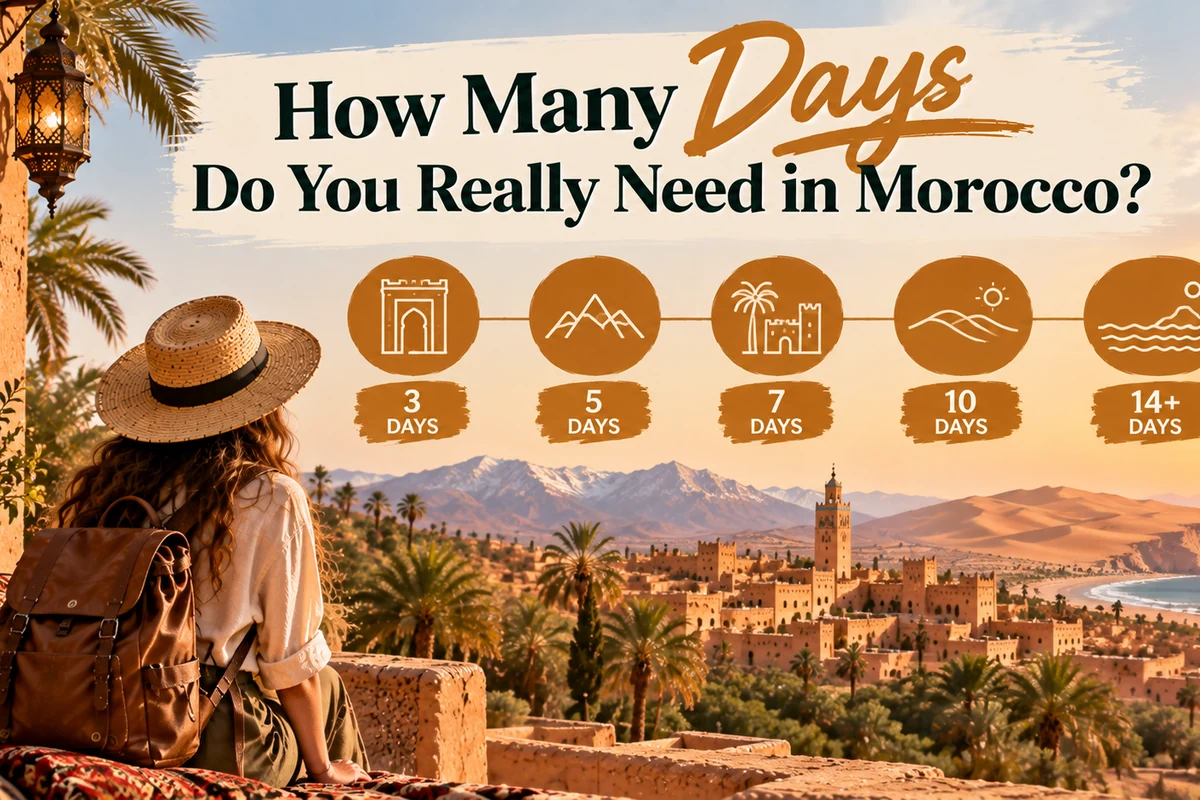
Three days buys one thing: a desert trip to Merzouga and back. Five lets you add the Atlas or the coast. Seven is where Morocco stops feeling like a race. The mistake we see most often is booking four days and trying to fit a week into them, because the distances are longer than the map suggests.
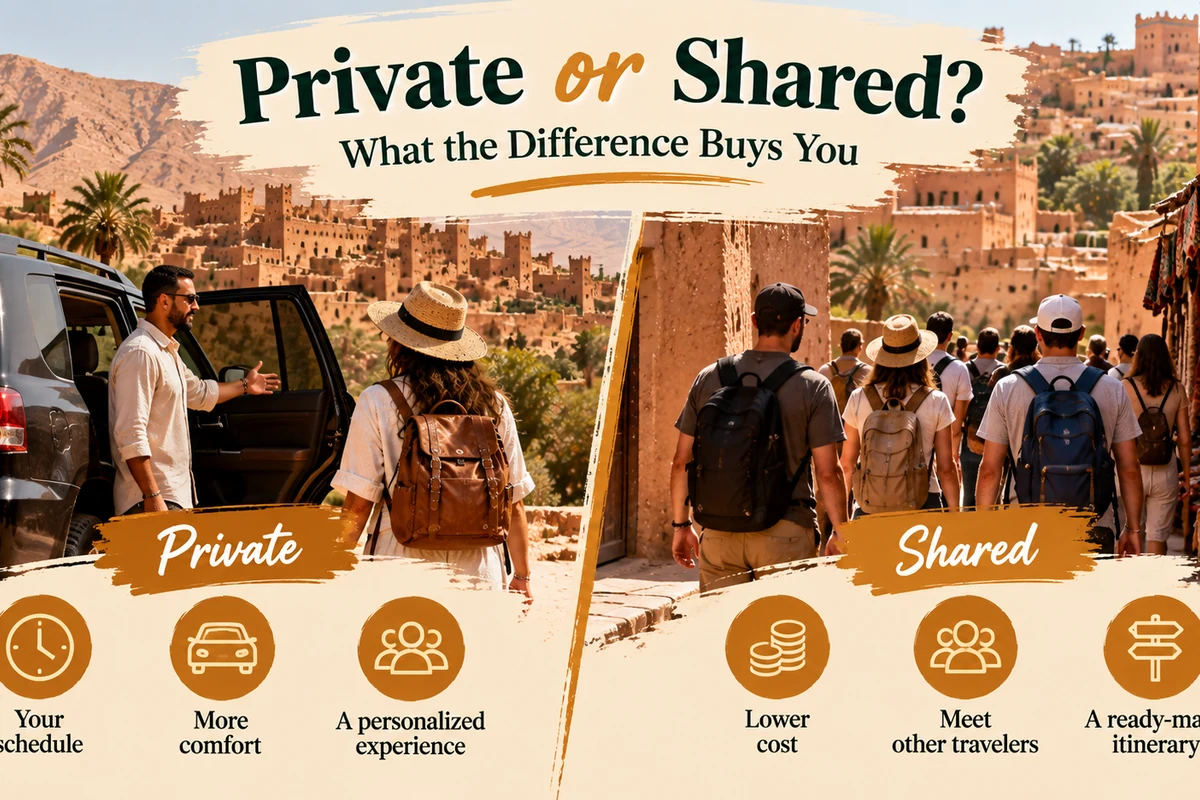
Shared means a fixed departure hour, a set route and a group. It works well and most clients are happy with it. Private buys three things: your own departure time, the length of each stop, and the right to skip what does not interest you. Over three days in the desert that adds up. On a day trip it matters much less.
One of the Morocco travel tips that saves the most arguments: transport, fuel and the driver are always in. Entrance fees usually are not, and neither is lunch, which leaves you free to eat where you want rather than where a commission is paid. On a desert circuit the camp night and dinner are included. Before booking anywhere, ask those two questions.
It depends on where you are. In a medina, a licensed guide saves you an afternoon and gets you into workshops you would walk past. On a mountain trail, a local guide is how you come back. On a road day trip, the driver knows the route and a second guide adds little. We say so even though a guide is something we could sell you.
Tipping is expected but nothing is fixed, and nobody will name a figure. A few dirhams for a bag or a parked car, ten to twenty for a small service, and for a driver or guide who spent the day with you, fifty to a hundred per group depending on how it went. Cash, given directly. A bad day needs no tip.
A deposit confirms the date, the balance is settled on the day. Outside the cities, plan for cash: machines thin out fast on the desert routes, and a village cooperative will not take a card. Change money in a bank rather than at the airport, and keep small notes.

Yes, with the caution any busy destination asks for. Violent crime against visitors is rare. What you will meet is insistence: unofficial guides, unasked directions, pressure in a shop. A firm and friendly no ends most of it.
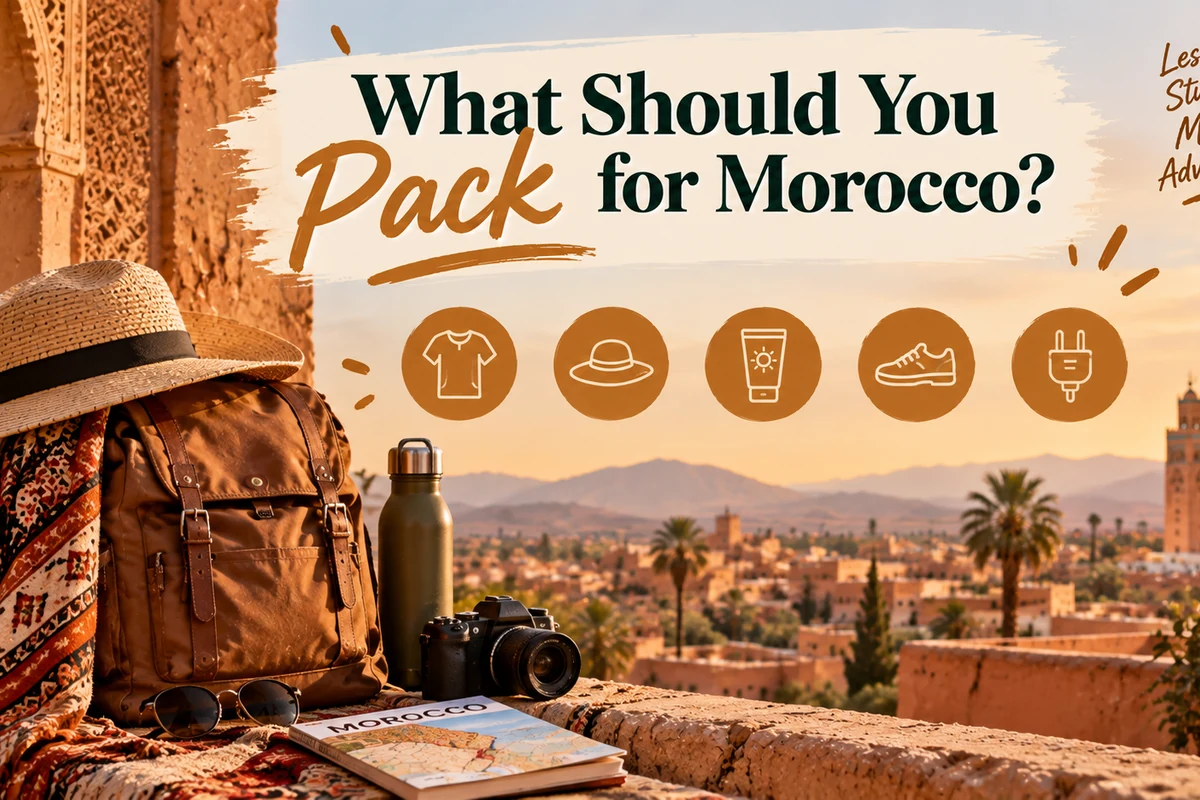
Layers. Of all the Morocco travel tips, this is the one people ignore: a Marrakech afternoon and a desert night the same week are twenty degrees apart. Walking shoes you have already worn in, a scarf for a village or a mosque courtyard, sunglasses and a hat for the south. A power bank matters more than an adapter: desert camps often run on a generator with fixed hours.
Four things move the price of a Morocco tour. None of them is a hidden fee.