
For walking around the Marrakech medina, no, you do not need a guide. For the High Atlas, for the desert, and for the historic monuments, yes, and for a different reason in each case.
We sell guided trips, so treat the “yes” with appropriate suspicion and read the “no” first. It is the honest part, and it is longer.
Where you genuinely do not need a guide
The medina of Marrakech. Getting lost in the souks is the experience, not a problem to be solved. The area is compact, it is busy, and the lanes all eventually reach a landmark or an exit. A phone map works badly between high walls, but asking a shopkeeper works perfectly.
Jemaa el-Fna and the food stalls. Nothing here needs interpreting. Walk in, look, sit down at whichever stall has Moroccan families at it.
The gardens and most museums. Signage is good and the sites are self-explanatory. A guide adds background you could equally read beforehand.
Shopping. A guide who takes you to shops is being paid by those shops, which is a normal arrangement and means the prices you see are not the prices you would otherwise get. Bargain on your own.
If someone offers to “show you the tanneries” or tells you the road ahead is closed, that is a paid detour beginning, not help. A polite refusal ends it.
Where a guide changes the day
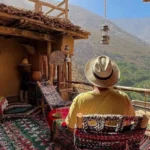
The mountains. This is the clearest case. Imlil sits at 1,800 metres and the paths above it are unmarked, cross private land and terraced fields, and lead into villages where a stranger arriving alone is simply a stranger. With a guide from the valley you walk the right paths and you get invited in for tea. Both our Imlil trips include a local guide: Imlil with lunch and a local guide and Imlil with a Berber lodge lunch.
The desert. Nobody drives themselves to Merzouga and back in three days. The distances are long, the roads through the High Atlas are demanding, and the camps are found by knowing where they are. Here the guide is also the driver, and the value is that you arrive rested: the 3 day desert tour.
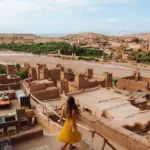
The monuments with history behind them. Ait Ben Haddou is a fortified earthen village that has been rebuilt, filmed and lived in for centuries. Alone you see handsome mud walls. With the local guide included in the Ait Ben Haddou day trip, you learn which parts are genuinely old, which were built for films, and who still lives inside.
Anywhere you cannot easily reach. The Ourika Valley and the three valleys loop need a vehicle. Public transport reaches the valley mouth and stops.
Official guide, driver-guide, or just a driver
| Official city guide | Licensed, badge-carrying, for medina and monument tours. Trained in history, works on foot. |
| Driver-guide | Drives and explains. The usual arrangement on day trips and desert tours. |
| Local mountain guide | From the valley itself. Knows the paths and the families. Essential above Imlil. |
| Driver only | Takes you there and waits. Cheapest, and enough when the place speaks for itself. |
Asking which one is included is a fair question to put to any agency, including us, before you book.
Do you need a guide to hike in Morocco?
For a valley walk of two or three hours from a village, no, though you will get more out of it with one.
For Jebel Toubkal, yes. At 4,167 metres it is the highest peak in North Africa, it takes at least two days with a night at the refuge, and the weather turns quickly. This is not a day trip from Marrakech, whatever you may read. Our Imlil days go to the villages and terraces below it, not to the summit.
What a guided day should include
- A clear answer on who your guide is: an official city guide, a driver-guide, or a local mountain guide.
- No mandatory shopping stops. A workshop visit because you asked is fine. A carpet showroom on the way back is not.
- The pace set by you. On a private trip this is the entire point, and it is what you are paying the difference for.
- Clarity on what is not included, typically lunch and monument entrance fees.
On tipping, which people find more awkward than it needs to be, we set out the usual amounts in how much to tip in Morocco.
Frequently asked questions
Do I need a guide in Marrakech?
No. The medina is walkable and getting lost in it is part of the experience. A guide is useful for the historic monuments, where the background is not written on the walls.
Is it safe to walk around Marrakech without a guide?
Yes. The medina is busy and well used. The main nuisance is unsolicited “help” that turns into a request for money, and a polite refusal settles it.
Do you need a guide for the Sahara desert?
In practice yes, because getting there means nine to ten hours of driving each way and the camps are not places you find alone.
Do you need a guide to hike in the Atlas Mountains?
For a short valley walk, no. For Toubkal, yes: it is 4,167 metres and needs at least two days.
How much does a guide cost in Morocco?
On our trips the guide is included in the price rather than charged separately. Independent city guides typically ask a fixed rate for a half or full day, agreed before you start.
Planning your days
Which days need a guide depends on which days you have. Our guide to how many days you need in Marrakech sets out what each length of stay makes possible, and a private day in Ourika is the usual first trip out of the city.
Background on the mountain itself is on Wikipedia’s Toubkal page.