

Morocco welcomed close to 20 million visitors in 2025, which makes it the most visited country in Africa. In the first eight months of 2026 it took 14.1 million, up 4.5 percent on the same period a year earlier, and August 2026 was the first month in the country’s history to pass two million visitors on its own.
Those numbers explain almost everything a traveller notices on the ground right now: the scaffolding, the new airport terminals, the rising prices in Marrakech, and the fact that the good riads are booked earlier than they used to be. This is what is driving it, and what it means for a trip you are planning now.
The numbers, in one table
| Figure | |
|---|---|
| Visitors in 2025 | close to 20 million |
| First eight months of 2026 | 14.1 million, up 4.5 percent |
| Official target for 2030 | 26 million a year |
| Infrastructure spend before 2030 | more than 190 billion dirhams |
| New hotel beds planned | about 60,000, a fifth of current capacity |
| Airport capacity target | from around 32 to over 70 million passengers |
The World Cup is the deadline, not the event
Morocco co-hosts the 2030 World Cup with Spain and Portugal. For the country’s planners that date works as a deadline rather than a destination: it has concentrated a decade of infrastructure decisions into a fixed calendar. The tourism ministry has been explicit that it treats the tournament as an accelerator rather than an end in itself.
What that means in practice is that stadiums, airports, roads and rail are all being built at once, in Casablanca, Rabat, Tangier, Marrakech and Agadir. If you visit between now and 2030, you will see construction. That is the honest trade for arriving before the crowds and the 2030 pricing.
The high speed rail line is the change that will matter most
Al Boraq, Africa’s first high speed line, has run between Tangier and Casablanca via Rabat since 2018, with trains reaching 320 km/h on the northern section. The current phase extends it more than 200 kilometres south to Marrakech, due for the 2030 tournament.
For a visitor, this is the single most useful thing being built. It turns Tangier, Rabat, Casablanca and Marrakech into one corridor you can move along without domestic flights or long drives. It does not exist yet. Until it does, the distances are what they are, and for anyone heading south the drive is still the deciding factor: how far the Sahara really is from Marrakech.
What is actually different on the ground in 2026
Prices in Marrakech have moved. Accommodation and restaurant prices in the tourist areas have risen noticeably over the past two years. Eating and sleeping slightly outside the main circuit still costs what it used to.
Booking windows have shortened at the good end. Well reviewed riads and the better desert camps fill earlier, particularly for spring and autumn, which are the two seasons everyone wants.
The country is deliberately spreading visitors out. Government strategy now pushes arrivals beyond Marrakech and Agadir, towards Rabat, the north and the coast. For a traveller this is good news: the places being promoted are quieter now and will not be in five years.
Air connectivity keeps widening. New European routes have opened steadily, and the stated next phase targets China, the United States and the Middle East. More direct flights means more people, earlier.
So when should you come
Before 2030, if you have a choice. The infrastructure that is being finished for the tournament will be in place from about 2029, while the tournament crowds and the tournament pricing arrive only in 2030. That gap is the sweet spot.
Within a year, the old advice still holds. March to May and September to November are the two good windows: the desert is bearable, the mountains are open, and the cities are not at 45 degrees. July and August are hot inland and busy on the coast.
If you are deciding how long to give the country, our guide to how many days to spend in Marrakech works through the arithmetic, and the full list of trips and activities from Marrakech shows what is reachable from a single base.
What has not changed
The things people actually come for are the ones no construction programme affects. The Erg Chebbi dunes have not moved, Ait Ben Haddou has stood there for centuries, the Ouzoud falls still run, and the blue of the Majorelle garden is the same blue it has been since 1937. The country is building around them, not replacing them.
Frequently asked questions
How many tourists visit Morocco?
Close to 20 million in 2025, making it the most visited country in Africa. The first eight months of 2026 brought 14.1 million, a 4.5 percent increase year on year. The official target is 26 million by 2030.
Is Morocco expensive now?
More than it was, in the tourist areas of Marrakech especially. Outside those areas, and outside the main season, it remains inexpensive compared with southern Europe.
Will the World Cup make it harder to visit?
In 2030, yes: expect full hotels and higher prices in the host cities. Before then, you get the finished infrastructure without the crowd.
Is there a high speed train to Marrakech?
Not yet. The line currently runs between Tangier and Casablanca via Rabat. The extension to Marrakech, over 200 kilometres, is being built for 2030.
What is the best time of year to go?
March to May and September to November. Both avoid the inland summer heat and the coldest desert nights.
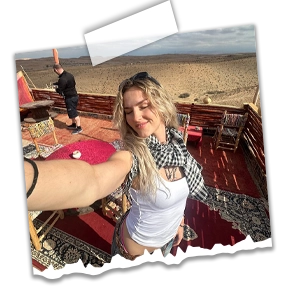 In recent years, sustainable tourism has become a global trend, and Morocco is no exception. This year, there is a notable rise in sustainable practices in the country’s travel industry. From eco-friendly accommodations to responsible tour operators, Morocco is making significant efforts to preserve its natural beauty and cultural heritage. Travelers can now explore the country while minimizing their carbon footprint and supporting local communities. Whether you choose to stay in a traditional riad or opt for a glamping experience in the Sahara Desert, you can rest assured that your travels align with sustainable principles. Join the movement and discover the enchanting beauty of Morocco while making a positive impact on the environment.