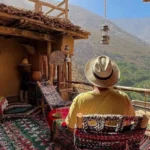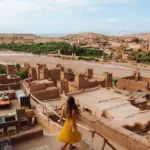

Pack layers, not a season. The temperature range inside a single Moroccan day is wider than most visitors expect: a Marrakech afternoon and a desert night the same week can be twenty degrees apart. What changes month to month is how many layers, not which ones.
The three things nobody regrets bringing: walking shoes already worn in, a scarf that covers shoulders, and a power bank. The three most commonly over-packed: formal clothes, heavy coats, and a hairdryer every riad already has.
What to pack for Morocco, month by month
| March to May | The easiest months. T-shirts by day, a jumper for the evening, a light rain layer for the Atlas. Add a warm layer if the desert is on your route |
| June | Hot inland and climbing. Loose cotton and linen, a hat, high factor sun cream. The coast at Essaouira stays cool and windy, so a jacket for there |
| July and August | The south passes 45C. Light long sleeves protect better than bare arms, and a scarf soaked in water does more than a hat. Desert nights stay warm |
| September | Still hot, but the edge comes off after the first week. Summer clothes plus one warm layer for the evening |
| October | The other easy month. Days are t-shirt weather, evenings need a jumper, desert nights need a proper jacket |
| November | Warm days, cold evenings, first rain in the north. A waterproof layer earns its place |
| December to February | Pleasant days, genuinely cold nights. Snow on the High Atlas. A warm coat, a hat and gloves for a desert camp, thermal layers for a mountain walk |
What the destination changes
The desert. Whatever the month, a desert night is colder than the day by a wide margin, and in winter it drops close to freezing. Bring a warm layer even in August. Closed shoes matter more than sandals: sand gets everywhere and the ground holds the day’s heat well after dark. A multi-day desert trip means two nights out there, so pack for the cold twice.
The Atlas. Altitude changes everything. Imlil sits well above Marrakech and the passes above it go higher again. People leave the city in a t-shirt and arrive somewhere fifteen degrees colder. Walking boots with ankle support if you plan to go past the village, and a windproof layer whatever the forecast said.
The coast. Essaouira is windy year round, which is what makes it comfortable in summer and cold in winter. A jacket that blocks wind matters more there than one that keeps heat.
The medinas. Shoes you can walk five kilometres in on uneven ground. The lanes are stone, often wet near the fountains, and rarely flat.
Clothing and local custom
Morocco is relaxed in Marrakech, Casablanca and the coastal towns, and more conservative in villages and rural areas. Nobody will stop you wearing what you like, but covered shoulders and knees make you unremarkable rather than looked at, which is usually what you want.
A large scarf is the single most useful item to pack: it covers shoulders in a village, wraps your head against sun or sand, and works as a blanket on a cold bus. Local women wear them for exactly those reasons.
During Ramadan the same applies with a little more care, and eating or drinking in the street during daylight is best avoided out of courtesy rather than obligation.
The practical list
| Power bank | More useful than an adapter. Desert camps often run on a generator with fixed hours |
| Plug adapter | Morocco uses European two-pin sockets, 220V. UK and US plugs need one |
| Sun cream and lip balm | Expensive and hard to find outside the cities |
| Small notes | Cash for tips, cooperatives and village lunches. Machines thin out on the desert routes |
| Stomach remedy | Expect to need it around day three. It passes |
| Reusable bottle | Riads and vehicles refill it. Plastic bags are banned in Morocco |
| Head torch | Desert camps have limited lighting, and the walk to a tent is dark |
| Dust protection for a camera | Fine sand ruins lenses and it gets everywhere |
What you can leave at home
Formal clothes, unless you have a specific dinner planned. Heavy hiking gear for a day trip: the walks around Imlil and Ourika are walks, not expeditions. A hairdryer, which every riad has. Large amounts of cash, since cities have plenty of machines. And a separate towel, which only matters if you are camping independently.
The short version
Layers, worn-in shoes, a big scarf, a power bank and more sun protection than feels necessary. Add a warm jacket if the desert or the mountains are on your route, in any month.
If you want to know what a day actually involves before you decide what goes in the bag, our Morocco travel tips cover the questions people ask before booking, and the full tour list shows what each trip covers.