
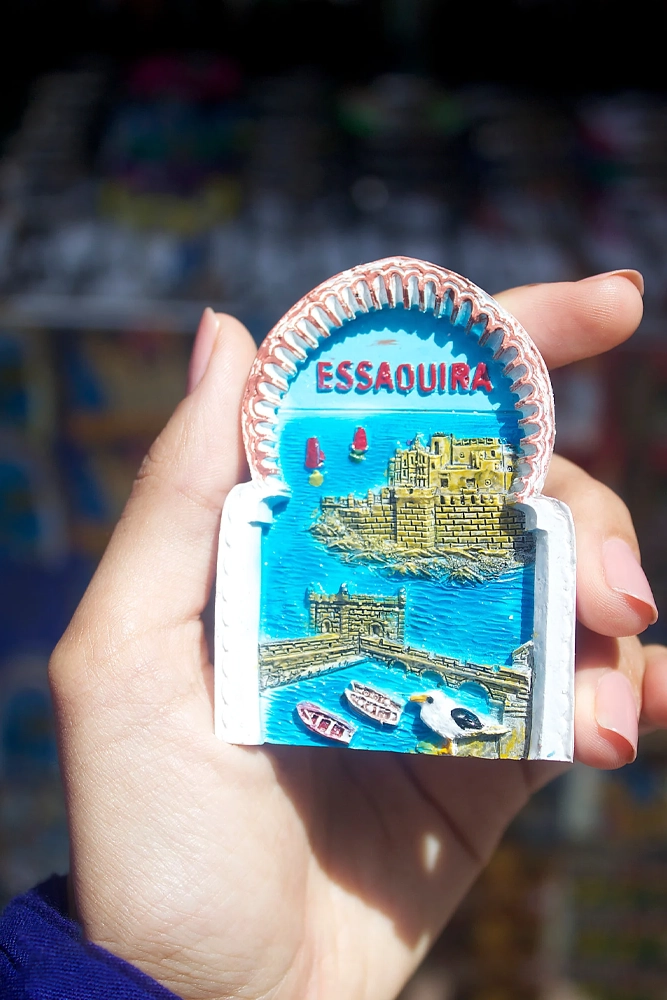
Essaouira is a walled fishing port on the Atlantic, three hours west of Marrakech, and the whole town fits inside a morning of walking. The medina is UNESCO listed, the harbour still works, and the wind never stops, which is what makes it bearable in August and cold in January.
It is the easiest day trip from Marrakech to enjoy without planning: there is no monument you have to see and no queue to join. You walk, you eat fish, you look at the sea.
Things to do in Essaouira
| Walk the Skala de la Ville | The sea ramparts with their bronze cannons. Free, and the best view in town |
| The fishing harbour | Blue boats, nets being mended, gulls everywhere. Busiest in the late morning when the catch lands |
| Eat grilled fish at the port | Pick from the ice, they grill it in front of you. Agree the price per kilo first |
| The medina and its souks | Straight streets, unlike Marrakech, so you cannot really get lost. Thuya wood and silver are the local crafts |
| The beach and the kitesurfers | Long, flat and windy. Good for walking, less so for swimming |
| Camel or quad on the sand | South of the beach towards Diabat, usually an hour |
| An argan cooperative | Women’s cooperatives on the road in. Oil pressed in front of you, and the goats in the trees are real |
| Art galleries | Essaouira has more working artists per street than anywhere else in Morocco |
| Gnaoua music | In cafes year round, and a full festival in June that fills the whole town |
The medina, and why it is different
Essaouira was laid out in the eighteenth century by a French engineer, which is why the streets run straight and cross at right angles. After Marrakech or Fes, that is disorienting in the opposite direction: you keep waiting to be lost and it never happens.
The whole walled town is about a kilometre across. You can cross it in twenty minutes, which leaves the rest of the day for sitting somewhere.
The wind, and what it means for your day
The trade wind blows almost every afternoon, and it is the town’s defining feature. In summer it keeps Essaouira ten degrees below Marrakech, which is why Moroccan families come here in August. In winter it makes a sunny day feel cold, so a windproof layer matters more than a warm one.
It also means the beach is for walking and kitesurfing rather than lying on. If you came for sunbathing, you picked the wrong coast.
Eating
The port grills are the thing to do once: you choose your fish from the ice, agree a price by weight, and they cook it at the stall. Sardines are the local speciality and cost very little.
In the medina, the small places behind the main square serve better tagines than anything on it. And the square itself, Place Moulay Hassan, is where the town sits in the evening.
How long you need
A day trip works, and most people do it that way: leave Marrakech at eight, three hours of road, five or six hours in town, back by evening. A private day trip lets you set the departure and linger; the shared version runs to a fixed schedule for about half.
Two nights is better if you want the evening: the light on the ramparts at sunset is the part day trippers miss, because they are already on the road home.
Practical notes
The road from Marrakech passes the argan cooperatives and the goats in the trees, which are worth a stop. Cards work in the larger restaurants but not in the souks. And if you are coming with children, the beach and the harbour do most of the entertaining for you: it is the easiest Moroccan town to visit as a family.
The other six kinds of day are on things to do in Morocco, and what to expect before booking is in our Morocco travel tips.