

Ouarzazate is where the Atlas ends and the desert begins, and it is best known for two things: the film studios and the kasbahs. Most visitors pass through on the way to the Sahara and see it in an afternoon, which is roughly what it deserves on a first visit.
The town itself is modern and low, built around a garrison. What is worth your time sits at its edges: Taourirt kasbah on one side, Ait Ben Haddou half an hour up the road, and the studios where a surprising amount of cinema was shot.
Things to do in Ouarzazate
| Taourirt Kasbah | A 19th century earthen palace in the town itself. An hour, and the best preserved interior in the region |
| Atlas Studios | Standing sets from Gladiator, Kingdom of Heaven and others. Guided visit, about ninety minutes |
| CLA Studios | The second studio, quieter, with the Game of Thrones sets |
| Ait Ben Haddou | 30 km away, the UNESCO ksar. The real reason most people stop here at all |
| Fint oasis | A green cut in the rock 20 km south. Four villages, palm groves, and almost no visitors |
| Noor solar plant | One of the largest concentrated solar plants in the world. Visible from the road, visits by arrangement |
| El Mansour Eddahbi lake | A reservoir east of town, with birdlife in spring |
| The cinema museum | Opposite Taourirt. Props and sets, best if the studios are closed |
| Draa valley, towards Zagora | The palm groves start south of town and run for 200 km |
The studios, and whether they are worth it
Ouarzazate has been standing in for Egypt, Tibet, Rome and Jerusalem since the 1960s. The sets at Atlas Studios are plaster and plywood up close, which is either disappointing or the whole point depending on how you look at it.
The visit is guided and takes about an hour and a half. It works well with older children and film enthusiasts, less so if you came for landscape. If you only have an afternoon, Taourirt kasbah is the better use of it.
Taourirt, and what a kasbah actually is
A kasbah is a fortified family house built of rammed earth, and Taourirt is the grandest surviving example. It belonged to the Glaoui, who controlled the passes and much of southern Morocco until independence.
Inside, the rooms are small, the ceilings are painted cedar, and the windows are placed to catch air rather than light. It explains more about how people lived here than any museum in the region.
Ait Ben Haddou, half an hour away
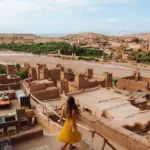
The ksar is the thing people actually remember, and it is 30 kilometres from Ouarzazate on the Marrakech road. A fortified village of earth on a hillside above a river, UNESCO listed since 1987, and still partly inhabited.
Most day trips from Marrakech do both in one go, since they are on the same road: a private day trip covers the ksar, Ouarzazate and the Tizi n Tichka pass, and the budget version does the same route in a shared vehicle. What that day actually contains is here.
Fint oasis, if you have longer
Twenty kilometres south on a rough track, Fint is a palm oasis in a canyon with four small villages and no tour buses. It is the one thing in the area that still feels unvisited, and it needs a 4×4 or a driver who knows the track.
How long you need
Half a day covers Taourirt and one studio. A full day adds Ait Ben Haddou properly rather than at a run. Two days lets you take in Fint and the start of the Draa valley, which is the road south towards Zagora and the desert.
On any Merzouga circuit you will pass through anyway: the four day route stops here properly, the three day version passes faster.
Practical notes
The Tizi n Tichka pass between Marrakech and Ouarzazate takes three to four hours and is the demanding part of the drive: hairpins, lorries, and no barrier in places. It is the strongest argument for a driver rather than a hire car.
Ouarzazate sits at 1 150 metres, so evenings are cool even in summer. And cash matters from here south, since machines thin out fast on the desert road.
The other six kinds of day are on things to do in Morocco.